
We realise our impact through the production of high quality research, evidence and communications products. Below are some example of reports, blogs, academic publications, conference papers and podcasts that we have produced.
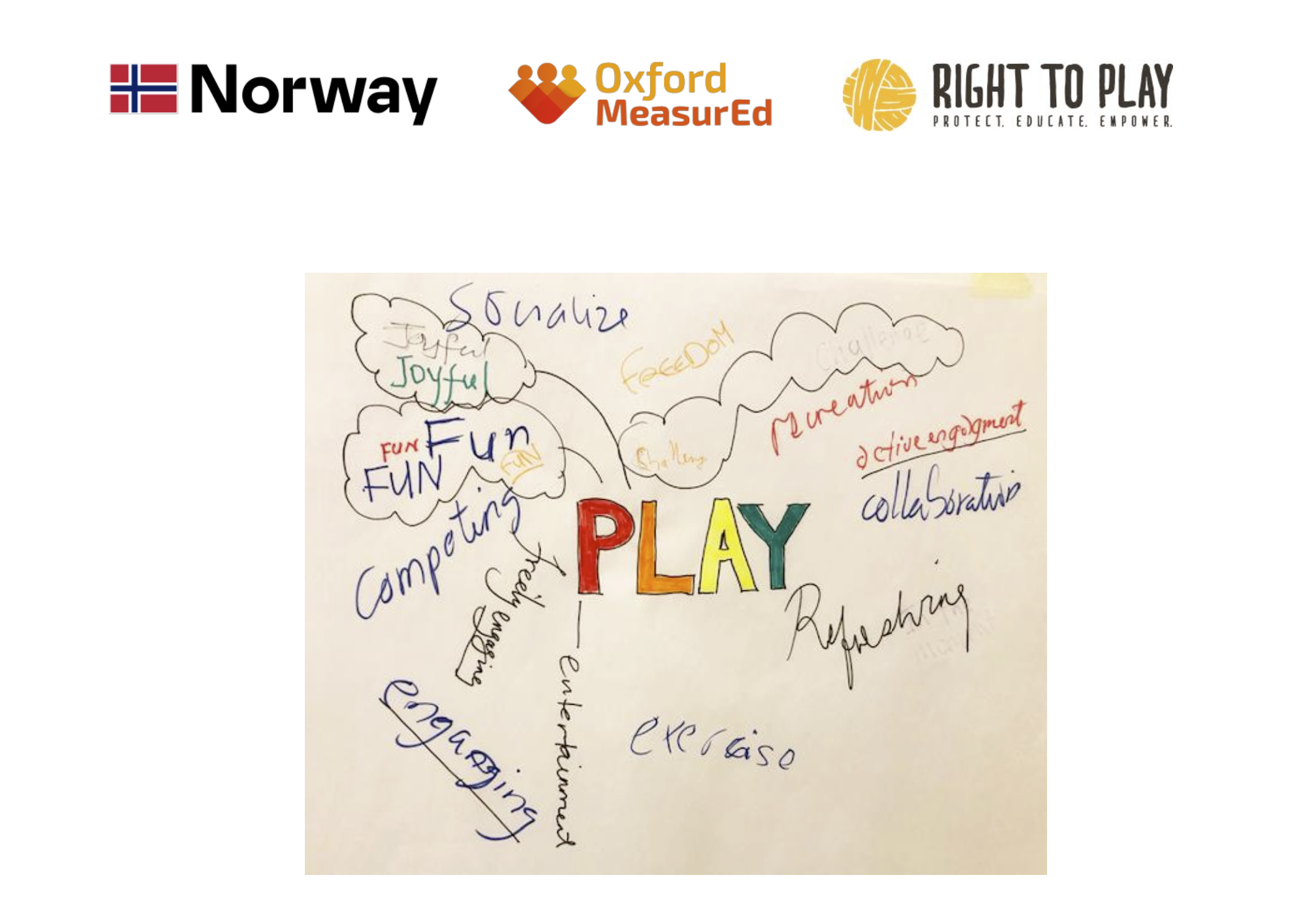
Publication: Evaluation of EQIE 2.0 in Ethiopia: Baseline report
Evaluation of EQIE 2.0: Baseline report
Oxford MeasurEd is evaluating EQIE 2.0, an in-service professional development programme aiming to strengthen teachers’ abilities to use play-based learning (PBL) pedagogy to support and enhance children’s foundational literacy skills and socio-emotional learning (SEL). EQIE 2.0 is being implemented by Right to Play (RTP) in Ethiopia, Lebanon, Palestine and Tanzania between 2025 and 2029, and the evaluation is focused on Ethiopia.
The baseline report provides a transparent baseline for later impact evaluation, and formativeevidence to inform ongoing delivery of EQIE 2.0. It sets out the context that the project will be implemented in, presents evidence of baseline school-, teacher- and learner-level outcomes, provides early conclusions on the project’s Relevance and Coherence and likely barriers and facilitators to impact, and makes recommendations for the implementation of the project. It also presents implications of the baseline findings for the evaluation methodology.
Conference Presentation: Social Research Association Conference 2026
Conference Presentation: Social Research Association Conference 2026
Presenters: Lydia Marshall and Anushay Mazhar
Our presentation, titled “Bridging Geographical Boundaries: Lessons from Carrying Out International Education Research”, explores the challenges and opportunities of conducting applied research across international contexts.
Conference Presentation: Practice Review of Metacognitive Teaching in the 16-19 Context: Interim Findings
Practice Review of Metacognitive Teaching in the 16-19 Context: Interim Findings
Presenters: Anushay Mazhar & Jonah Bury
This presentation, which was delivered at the EEF-Gatsby 2026 Conference, reviews how metacognition is conceptualised and practised across 16-19 settings, distinguishing between teacher-led and student-led approaches.
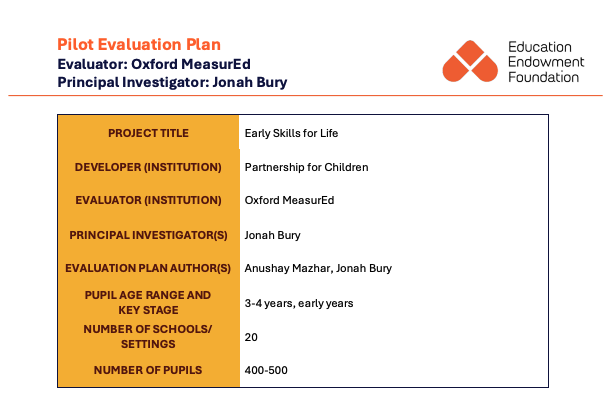
Publication: Early Skills for Life Pilot Protocol
Early Skills for Life Pilot Protocol
Oxford MeasurEd is conducting the independent pilot evaluation of Early Skills for Life (ESfL), a 20-week programme developed by Partnership for Children to build self-regulation and personal, social, and emotional skills in 3 to 4-year-olds. The pilot protocol outlines evaluation methodology, which assesses the programme's feasibility, acceptability to practitioners and families, and readiness to progress to a full efficacy trial.

Publication: Thinking Mathematically Pilot Report
Thinking Mathematically aims to improve pupils' mathematical problem-solving skills by supporting Year 7 teachers to teach problem-solving more explicitly and consistently through approaches such as modelling their thinking through think-alouds.
28 schools from the North East and Yorkshire and the Humber participated in the pilot between September 2024 and April 2025, representing a diverse range of contexts, from small rural schools to large urban settings.
The evaluation found signs of promise. Teachers and pupils generally perceived the programme to be different from business-as-usual teaching, teachers reported increased confidence in teaching mathematical problem-solving, and there were indications that key practices could be sustained beyond the programme.
We also identified important implementation challenges. In particular, training was not always cascaded consistently to Year 7 teachers by lead teachers, and not all schools delivered the programme as intended. The findings suggest that the programme would benefit from further refinement and piloting before progressing to a full efficacy trial.
To learn more about the pilot evaluation and the report findings, read the report below
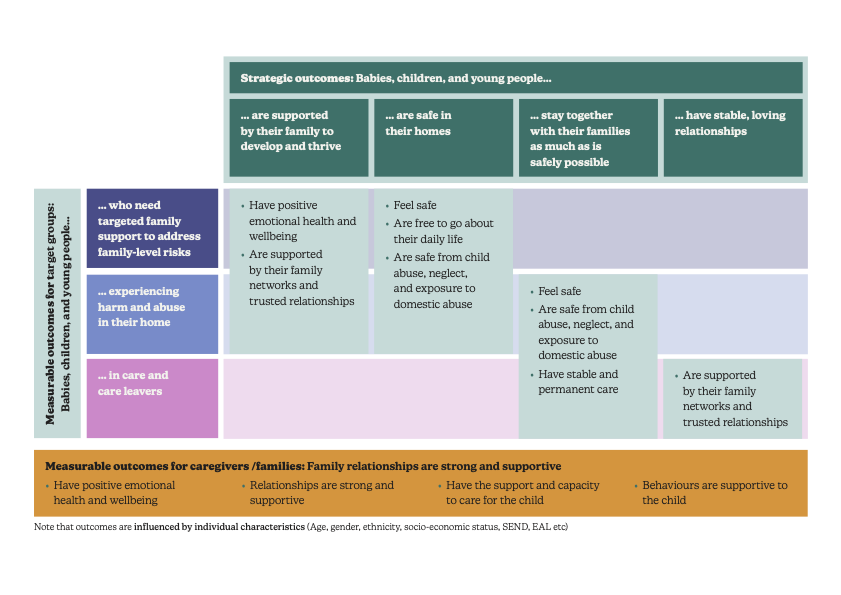
Publication: Foundations’ Outcomes Framework and Measures Database
We worked with Foundations, the What Works Centre for Children and Families in the UK, to develop their Outcomes Framework and a Measures Database aligned with that Framework.
The Outcomes Framework articulates the measurable changes that Foundations seeks to achieve for babies, children and young people, and their caregivers and family networks. The Measures Database is a repository of tools and data sources that can be used to measure the outcomes in Foundations’ Outcomes Framework. It provides practical and statistical information about the measures, to support evaluators and researchers to decide how to measure outcomes and impact.